
Shaker Heights Previous Residents by Record Era
One address passes through several record systems as time moves backward. Begin with the source most likely to cover the period in question, then carry the parcel number and legal description from one source to the next. The table distinguishes ownership evidence from address listings and building evidence. That keeps a search for previous residents tied to a date rather than turning a property result into a complete history of everyone who lived there.
| Record layer | Time span | Where to use it | What it contributes |
|---|---|---|---|
| Recorded documents | 1810 to present | Cuyahoga Recording Division and its search portal | Recorded deeds and land instruments, best connected by PPN or legal description. |
| County tax records | c.1819 to 1986 | Cuyahoga County Archives | Tax and account history, not a complete list of people at an address. |
| Original map volumes | 1860 to 1945 | Cuyahoga County Archives | Historic geography and structural clues. |
| SHPL plat-map books | 1920s to 1990s | Shaker Heights Public Library Local History | Names, dates, and purchase amounts for local property research. |
| Address sections and criss-cross volumes | 1929 onward, with collection-specific gaps | Cleveland Public Library | A listed adult, business, or subscriber associated with an address in a particular year. |
| Federal census | Public release through 1950 | NARA and library access points | A periodic household snapshot, not an annual address roll. |
| Building cards and blueprint film | Card-dependent | Shaker Buildings, City, and SHPL | Original construction and later work clues; pre-1945 plans have a known collection gap. |
The order matters. A modern transfer may supply a former party name. That name can lead backward through a deed search, while a directory or census check can test whether an address association appears in the right period.
The Cuyahoga Recording Division page describes the recorded-document coverage and the office behind the online index.
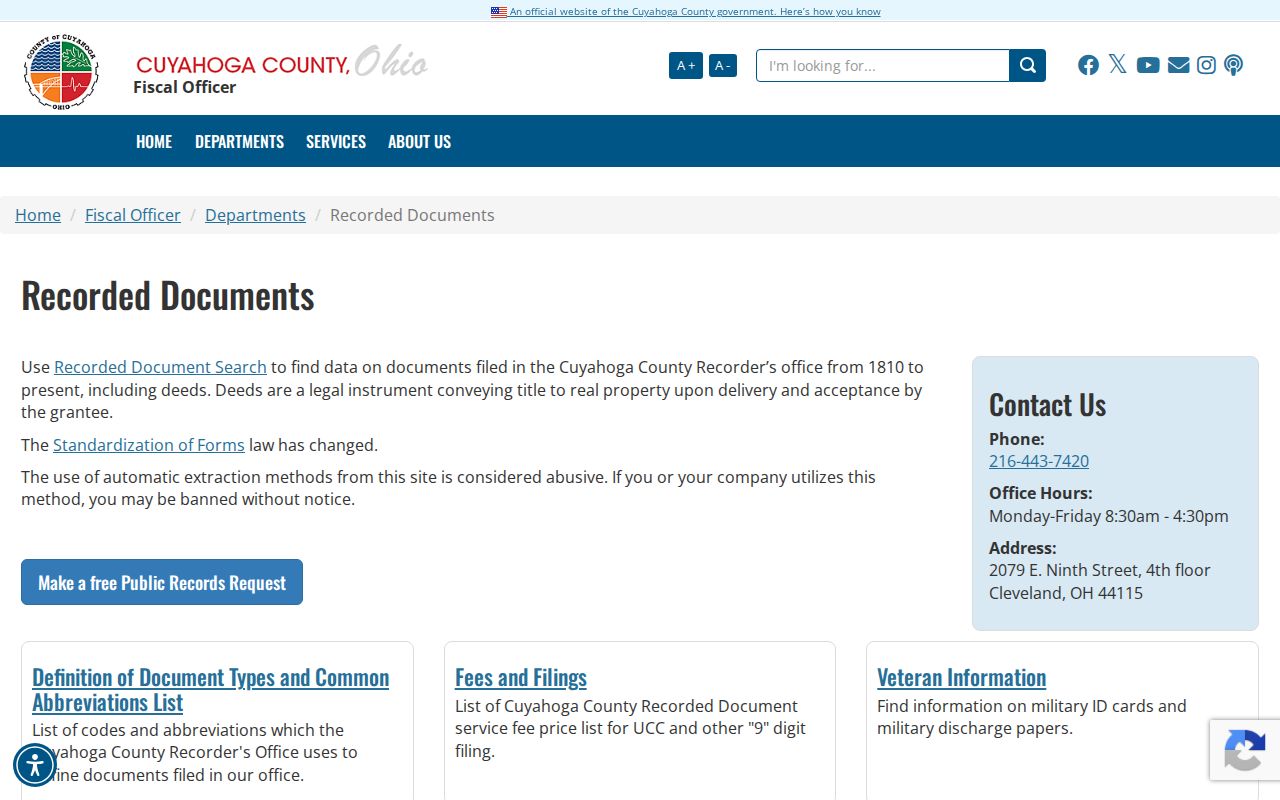
The portal is a useful access channel, while the Recording Division remains the place to confirm the actual instrument.
Note: Start with the era that fits the question, then preserve the parcel identifiers as the trail moves backward.
Shaker Heights Previous Residents Parcel Anchor
Before following names, search the address in Cuyahoga MyPlace and record the PPN, situs address, legal description, municipality, transfer references, and any map context. MyPlace accepts Address, Owner Name, and Parcel Number searches. Its City context should be set to Shaker Heights after the parcel is checked. This protects the older trail from the limits of a display address, especially where a lot was subdivided or a former number appears on a historic card.
The situs field identifies the property. An owner mailing field shows where tax correspondence goes. Both may be useful clues, but neither should be relabeled as a current or complete household record. For previous-resident research, the parcel and legal description are the bridge that lets a property trail survive a changing street label or a parcel split.
Shaker Heights Previous Residents and Transfers
For 1975 forward, Shaker Heights Public Library's house-research guidance directs researchers to MyPlace by address, last name, or PPN and then to the Transfers tab. Treat each transfer as a dated lead: note the current grantee, grantor, date, deed type, sale amount, PPN, legal description, subdivision or sub-lot, volume/page, and document number. Transfers update daily, but a displayed transfer still needs an inspection of the recorded deed when the legal details matter.
Use the transfer trail in reverse. The person who conveyed the parcel in the newer deed is often the party whose earlier acquisition should be found next. If a link fails, return to the PPN and legal description instead of assuming the address alone is continuous. That simple check avoids a common error in research about who lived here before.
Shaker Library's home-history guide lays out the local bridge from property data to deeds, plat maps, and plans.
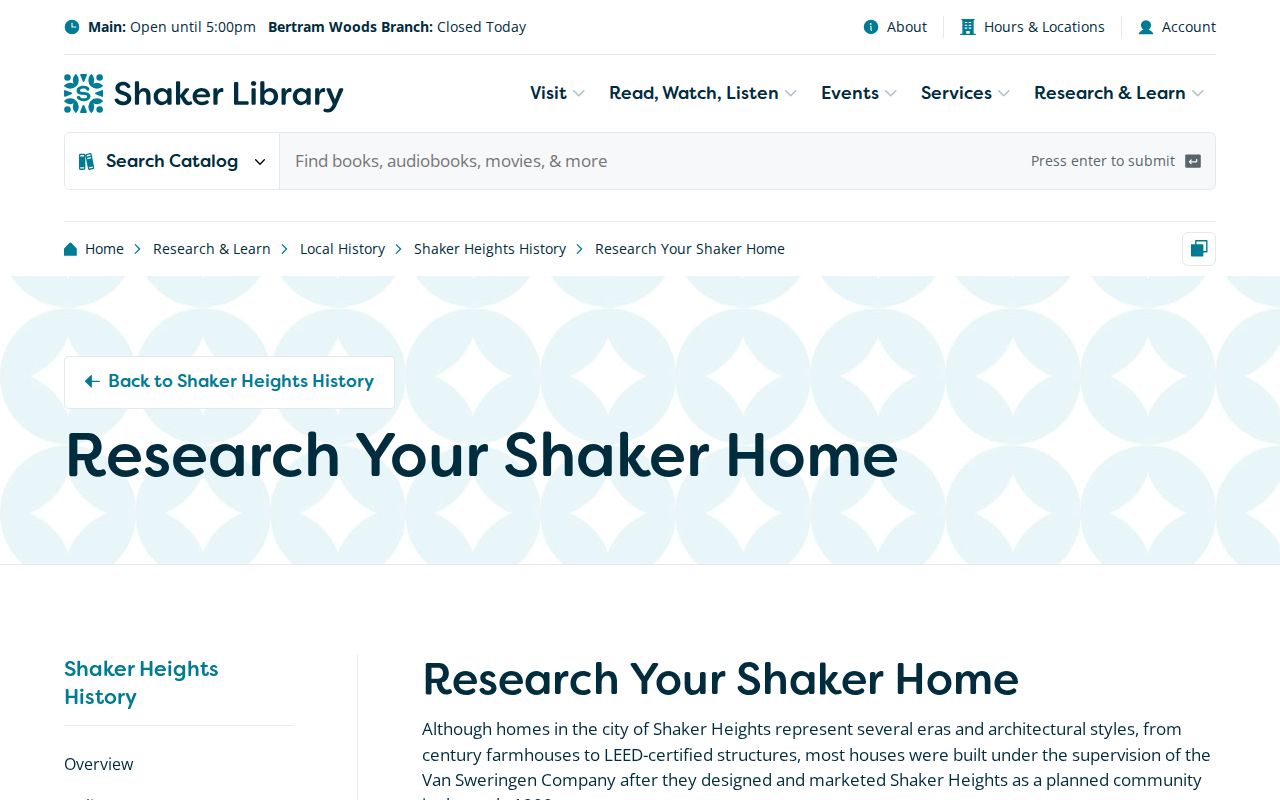
The guide's locally tailored sequence is especially helpful when an address search reaches a period before the modern transfer display.
Following a Cuyahoga Deed Chain Backward
The Cuyahoga Official Records Search says its data reaches from 1810 to the present. Start with a parcel ID and a tight recorded-date range. When a current address does not bring back an older instrument, use the former owner's full name, a date range, legal subdivision, section or condominium field, document number, volume/page, or an OCR phrase. The advanced form supports Grantor and Grantee roles, which makes the backward handoff visible instead of guessing from a street name.
- Open the parcel result and capture its PPN and legal description before searching names.
- Find the newest acquisition deed through the PPN, party, date, or document information.
- Record the new grantee and the former grantor, along with the instrument's legal placement.
- Search that former grantor as the earlier grantee, first with a controlled date range and then with legal-description clues.
- Repeat the continuity check, then use archive maps, tax sources, and plat material when the online trail needs earlier context.
For a property transition linked to a death, Cuyahoga Probate Court can provide the case record and the recorder can show how title moved. That pairing is a lawful route for estate and heir research, but the court's official copy, not a docket snippet, is the source to verify.
- Grantor and grantee
- The grantor conveys an interest in the deed; the grantee receives it. The roles help place a person on the correct side of a transfer.
- Chain of title
- A documented sequence of recorded transfers affecting the same parcel or legal description.
- Legal description
- The subdivision, lot, sub-lot, section, or similar land description used to identify property beyond its display address.
- Criss-cross directory
- An address-first volume that may connect a selected year and address to a listed adult, business, or subscriber.
Note: A recorder index is an access point, so inspect the image or request the defined record before relying on a title detail.
Older Shaker Heights Clues at the Archives
When a Shaker Heights address predates the modern transfer trail, use the local sequence rather than an address-only search. SHPL's plat-map books preserve names, dates, and sometimes purchase amounts for purchases from the 1920s through the 1990s. Cuyahoga County Archives adds tax records from about 1819 through 1986, original map volumes from 1860 through 1945, and earlier suburban atlases. County property research is appointment-based, and the Archives can help route a defined historic-property question.
Sanborn material is another location check, not a universal address answer. Library of Congress catalog records show that parts of Shaker Heights appear in specified Cleveland volumes, including 1926 and a later republication. SHPL directs users to its Sanborn database with a Cleveland search and a street filter. No authoritative complete sheet-by-sheet inventory supports claiming that every historic Shaker address appears on every Cleveland volume.
Cuyahoga County Archives property-research information explains the archive route for earlier land and map material.
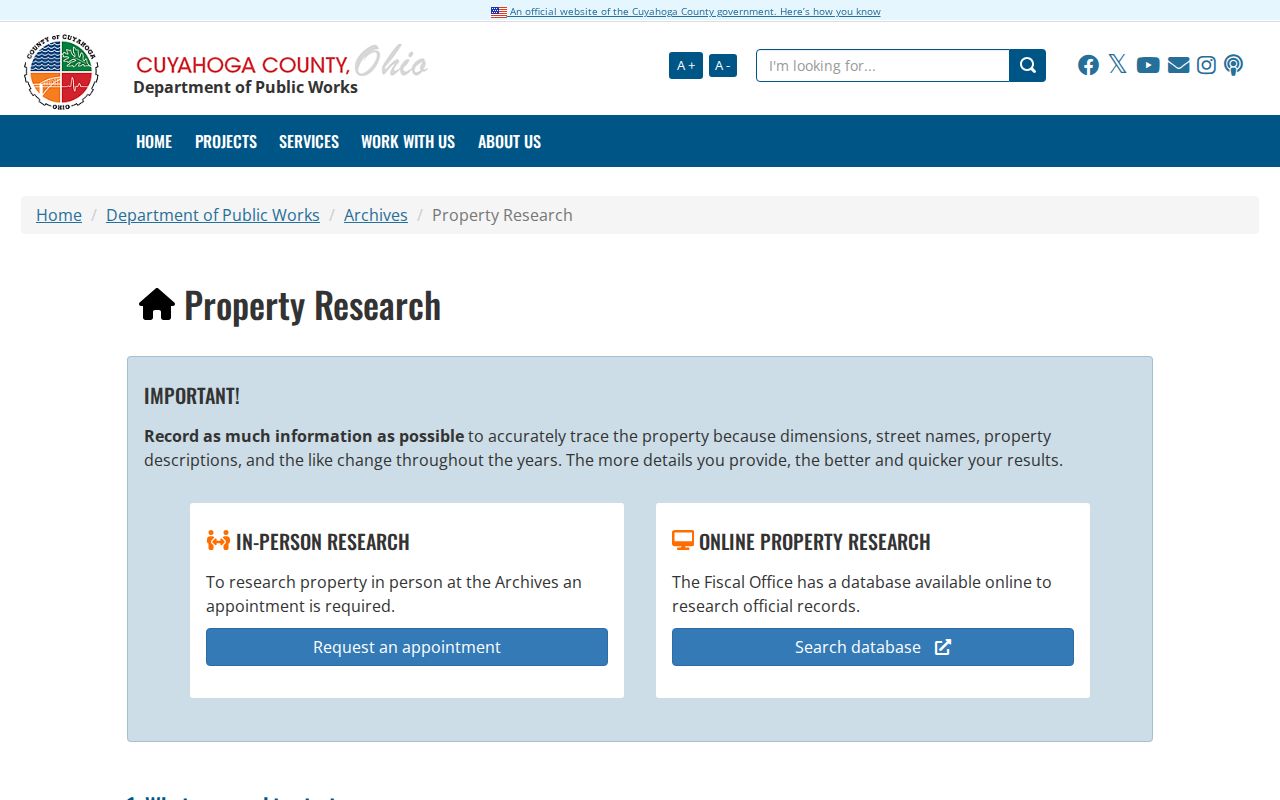
Archive sources help explain the land and its records before a modern portal's address search is likely to succeed.
Note: Ask archive staff about the specific map, tax, or plat series rather than assuming one source covers every year.
Shaker Heights Building Cards and Lost Plans
The City's Building Card Database supplies a distinct Shaker Heights layer. It searches by street, street address, architect, original owner, builder, or keyword and has more than 10,000 historic cards. The card front commonly records original permit data; its back can show later permit numbers, dates, and brief renovation descriptions. Some annotations flag former street numbers or names, sub-lots, or plan-file information. That can place a structural change in time without declaring that an original owner or permit holder remained at the address.
There is an important documented gap. Original City building plans were destroyed. Only plans that were filmed survive on microfilm, and buildings erected before 1945 were not microfilmed or retained. A missing blueprint is therefore a collection limit, not evidence that a property lacked a plan or change. Carry the PPN, historical address form, and building-card notes into the deed and map research before drawing a conclusion.
The Shaker Historical Society library and archives provides an appointment-only local fallback with maps, vertical files, photographs, and Shaker-related historical material.
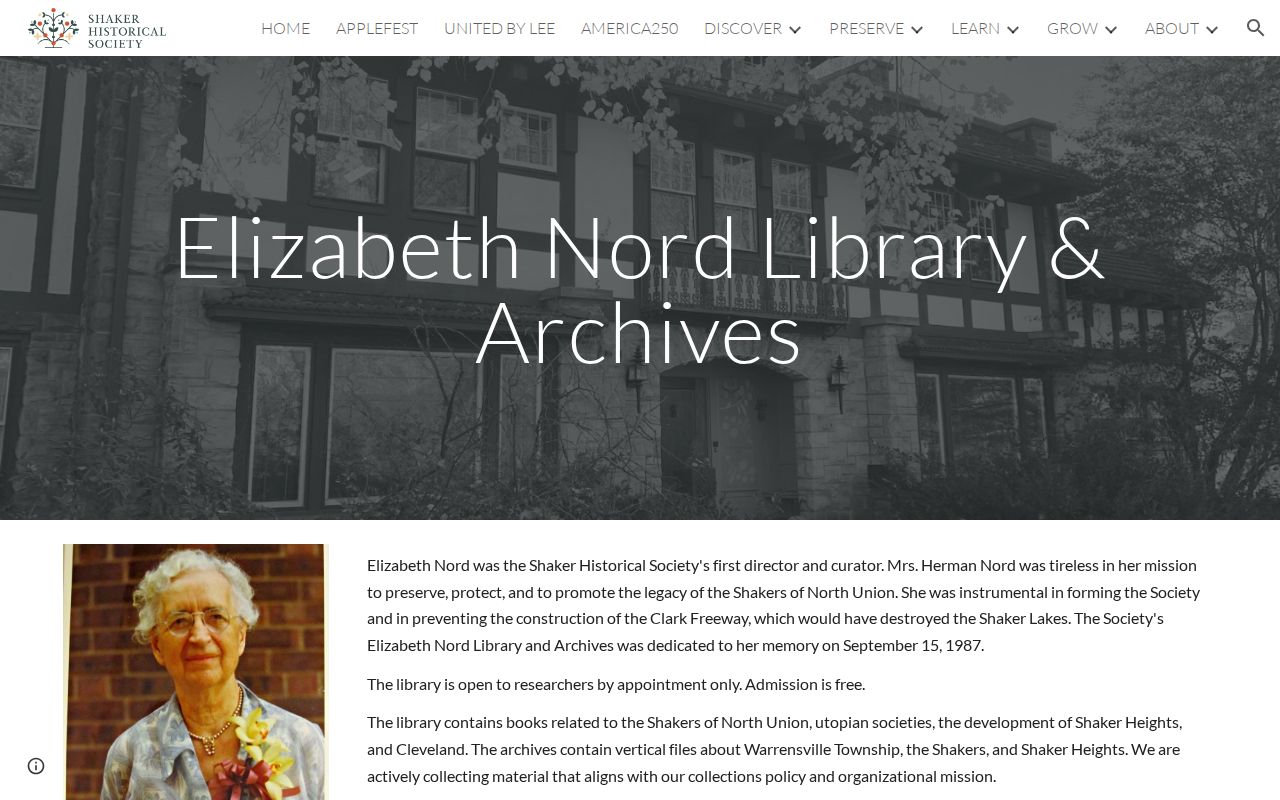
The Society's holdings complement the library and City records, especially when a property trail reaches the community's earlier geography.
Pairing Shaker Heights Directories With Census Years
Directories and census schedules add a household layer to the land trail, but their timing and coverage differ. The Cleveland parent directory explicitly names Shaker Heights from 1925 through 1950, address sections begin in 1929 in most local volumes, the five-suburb series runs from 1949 to 1963 with listed gaps, and the East Suburban series follows from 1964. Criss-cross runs can associate an address with a listed person or business, but a publication gap or unlisted number is not proof of absence.
- Choose a directory volume nearest to the dated transfer or building event, then read its locality abbreviations and address section.
- Save the exact publication year and wording of the listing rather than converting it into a claim of ownership.
- Pair the finding with the nearest available federal census, which is public through 1950 and records a periodic snapshot.
- Use an obituary, historic death index, cemetery source, or Probate file only as the dates and names point there, then record what source produced each fact.
The historical volumes themselves are detailed on the Shaker Heights city directory collections page. They are a companion to the backward address trail, not a substitute for confirming the parcel and recorded deed.
Shaker Heights Past Households and Endpoints
Past residents research is most reliable when each claim is dated and identified by source. A directory can place a listed adult or business at an address in its publication year. The census can show a household at a periodic point. Ohio History Connection's historical death index covers 1913 through 1944 and 1954 through 1970 for its separate index, while other archival holdings have their own access rules. These records can help explain a name change, death, or family transition, but none should be stretched beyond its purpose.
Probate is especially useful when a property transition follows a death. Start with the Probate Party Search and case summary, request the relevant official case copy, then verify title movement in the recorder. Warrensville West Cemetery and local obituary collections can give historical context for a family trail, but a cemetery or obituary record does not establish a later address by itself. Keep the deed, directory, census, and estate documents as separate dated steps.
Lawful use. Use Shaker Heights previous-resident research for house history, family history, estate questions, or personal curiosity. Do not use old addresses or records to stalk, harass, intimidate, or harm a living person, and respect confidential or sealed records.
A no-result can reflect a missing plan, an unprinted directory year, a changed address, a protected file, or a collection boundary. Preserve the source and date, then ask the relevant library, archive, court, City office, or County custodian about the next lawful channel.
Note: Label a result as an address association in a named source and year, not as a claim that the record identifies every person who lived there.