
Finding Shaker Heights Residents
The Shaker Heights residents directory is not one master roster. It is a set of separate public trails. Start with the fact you can actually check. A current street address fits Cuyahoga County property data best, while a person's name opens voter confirmation, recorded documents, and court indexes. Older addresses live in library directories, building cards, plats, and deeds. Each source carries its own date and purpose. A parcel may name an owner yet skip others at the address, and a directory entry only reflects one moment in the publisher's listing.
Keep searches narrow and note the source date. Cuyahoga County holds the legal property and recording channels, while the City keeps municipal material. Ohio adds statewide voter and vital-record tools. When an online index runs out, request the existing record from the office that created it. That habit pays off. It keeps the Shaker Heights residents directory useful for family history, estate work, reconnecting with people, and resolving a record that seems off.
- For a present address, search MyPlace by address, owner name, or parcel number and record the permanent parcel number.
- Compare the result’s transfer trail with the Recording Division’s party, parcel, or document search.
- For an individual registration question, use Ohio My Voter Information with the person’s name and county.
- For a historic household, consult Shaker Heights library collections and the address section of the relevant directory volume.
- Ask the City, county office, court, library, or archive for a defined existing record when a public web tool does not supply it.
Note: A search result is a lead toward Shaker Heights residents, not proof of every person connected with an address.
Shaker Heights Resident Record Offices
Shaker Heights records sit at several levels of government. The City is the custodian for permits, planning files, council records, and municipal administrative material. Cuyahoga County handles most parcel, tax, deed, and court records, while Ohio adds statewide voter and vital-record access. Each card marks a main starting point. Still, the record type controls. A request belongs where the record was created. A court filing comes from the court, not from the City's general administrative form.
Cuyahoga Recording Division
2079 E. Ninth Street, 4th Floor
Cleveland, OH 44115
216-443-7020
Ohio voter information
Statewide registration tool
Ohio Secretary of State
877-SOS-Ohio
City administrative records have a second route. Inspection is free. Through Shaker Heights' public-records policy, the City accepts online, phone, email, mail, and in-person requests for an existing record described by subject and date range, then routes it to the department holding it.
Shaker Heights MyPlace Records
Cuyahoga County MyPlace takes an address, owner name, or parcel number. Match the street address to the parcel before selecting Shaker Heights as the city context. A result opens several doors. General Information, Transfers, Values, and permits are all there. Land and building details appear too. Map context, a property summary, and tax-year paths round it out. The county calls MyPlace an informational compilation. For legal certainty, compare it with the recorded instrument the Recording Division holds.
| MyPlace field or tab | Type | Required | Shaker Heights use |
|---|---|---|---|
| Address | Text search | No | Find a parcel by a precise street address. |
| Owner Name | Text search | No | Check name variants and compare results. |
| Parcel Number | Formatted text | No | Use the stable property identifier. |
| City | Context/filter | No | Select Shaker Heights after checking the record. |
| Transfers | Result tab | Not applicable | Open the dated property-transfer trail. |
The county's MyPlace search screen displays the entry fields for address, owner, and parcel. It anchors any Shaker Heights residents directory address question. The tool joins a street address to its parcel record before the deed work begins.
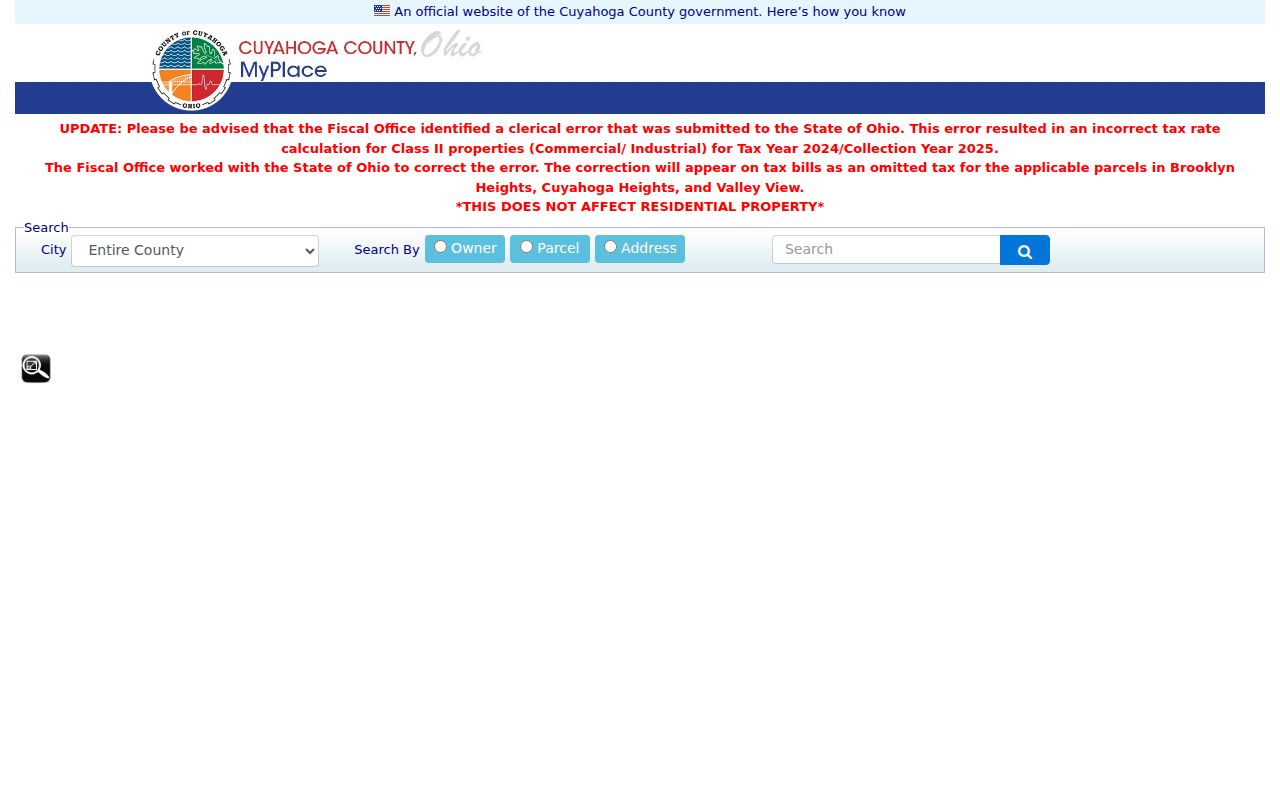
Treat the transfer tab as a dated lead. Verify any transfer in the county's recording system, since an owner's name alone does not settle current residency.
Shaker Heights Voter Record Checks
Ohio My Voter Information is a narrow confirmation tool, not a by-street directory. It asks for a first name, last name, and county. It returns registration and precinct details. The public voter record is governed by R.C. 3503.13, which excludes protected categories and confidential records.
Name variants matter. A prior surname or a common name can hide a match. The Ohio DATA Act archive is a separate channel. Its county daily voter snapshots can be searched by election and date, then downloaded under the archive's rules. Those files need careful use. Protected fields stay protected, so for a one-person record begin with the three-field confirmation form rather than treating the Shaker Heights residents directory as a street-wide voter roll.
Shaker Heights Deed Index Trail
The Cuyahoga Recording Division reports recorded-document data reaching from 1810 to the present. That depth makes deeds a strong directory trail. Its Official Records Search runs in two modes, index only or index plus full-text OCR. Multiword input behaves differently in each mode. A former owner's name, document number, date range, legal subdivision terms, or parcel number may work better than a modern street label.
A grantor conveys an interest. A grantee receives it. In a backward title trail, today's grantee becomes the next search term. Record the document number, date, parcel, legal description, and parties before stepping back. When details conflict, the official image controls. The county's quick-search interface supports a Shaker Heights residents directory trail through recorded property parties. A parcel index is not a household list.
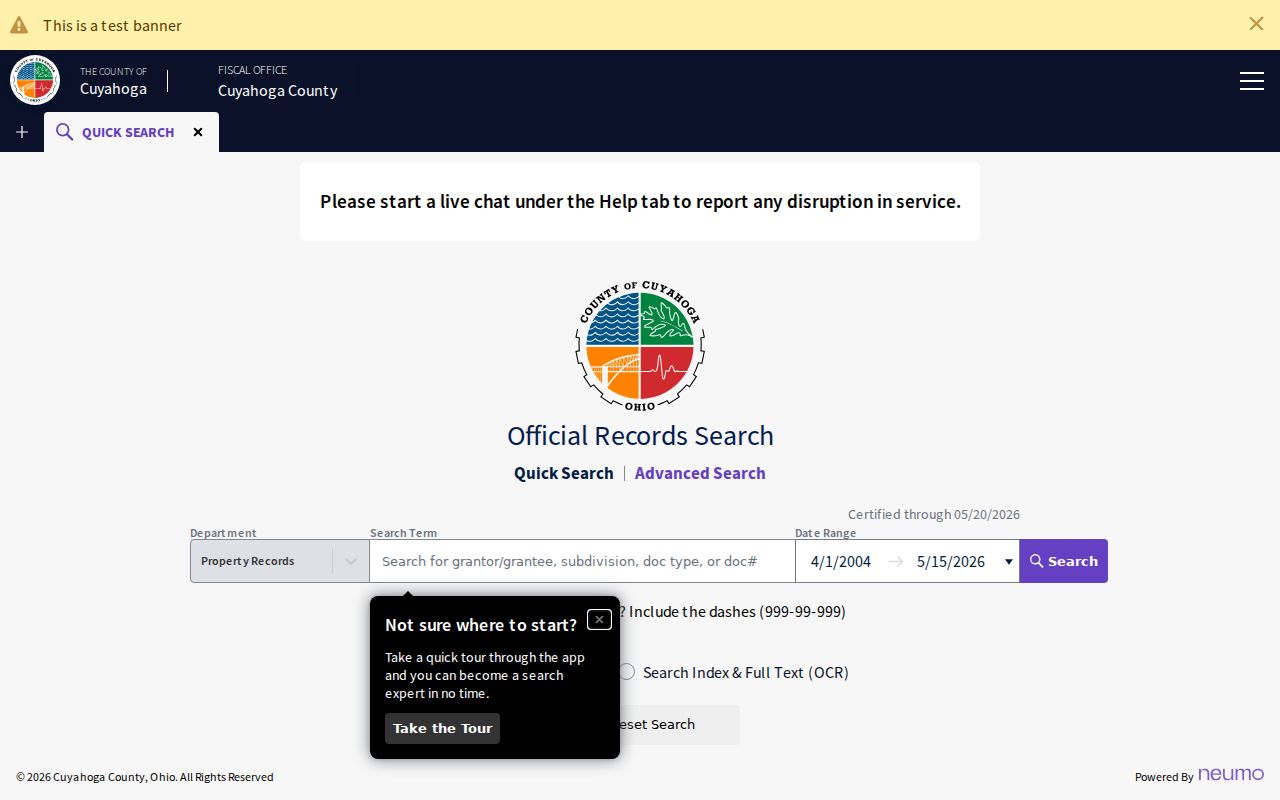
A street-level question can demand the full parcel and deed sequence. Use the dedicated Shaker Heights street directory record trail for that deeper search.
Current Shaker Heights Resident Sources
No single Shaker Heights source lists every household today. That surprises many people. The official options each describe one relationship: owning property, registering to vote, signing a recorded document, or appearing in a court or municipal record. Knowing that distinction sharpens any resident lookup. Pick the source in the table that matches the actual question, then weigh its date, scope, and access limits before treating a name match as proof of a current address.
| Shaker Heights source | Relationship shown | Custodian | Access path |
|---|---|---|---|
| MyPlace parcel record | Owner, parcel, transfer and property context | Cuyahoga Fiscal Office | Public address, owner, or parcel search |
| My Voter Information | Individual registration and precinct confirmation | Ohio Secretary of State | First name, last name, county |
| Official Records Search | Parties to deeds and other recorded documents | Recording Division | Public index and available images |
| City record request | Existing municipal record by subject and date | Shaker Heights department | Online, phone, email, mail, or counter |
| Neighborhood association contacts | Community routing, not member rosters | City-recognized associations | Public City contact page |
Official records and commercial people-finder products serve different roles. The official source has a named custodian. It also states the record's purpose and offers a channel to verify or request a copy. Commercial results can go stale, lack the source document, or merge people who share a name. For a question about one person, begin with the person-focused steps in the Shaker Heights resident lookup process. Keep only the details the official source supports.
| Official record route | Commercial people-finder category |
|---|---|
| Shows a defined record and the custodian who can verify it. | May combine information without the underlying public document. |
| Has stated access rules, source date, and copy path. | May have unclear update dates or matching logic. |
Shaker Heights Court Name Searches
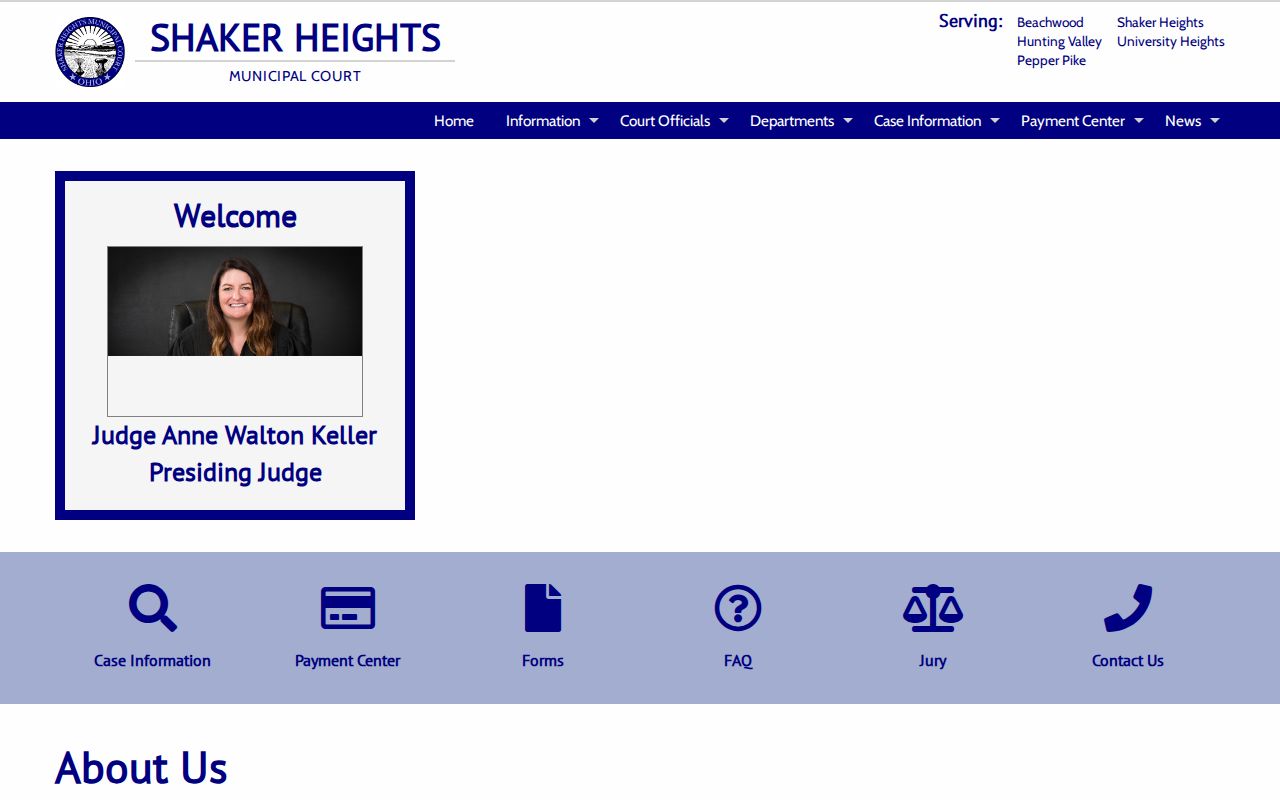
Courts play a different role in a Shaker Heights residents directory. The Shaker Heights Municipal Court separates its case searches. Traffic and criminal, civil, and camera cases each get a distinct search. It covers the court's service area. Live forms sit behind a CAPTCHA. The court's published page therefore supports no promises about its current name-search fields. The clerk and copy channels remain the fallback when web access fails. Sealed and confidential case material is off limits. The court's official case-information menu appears below. Any result there identifies a case path rather than an address or a full portrait of a life.
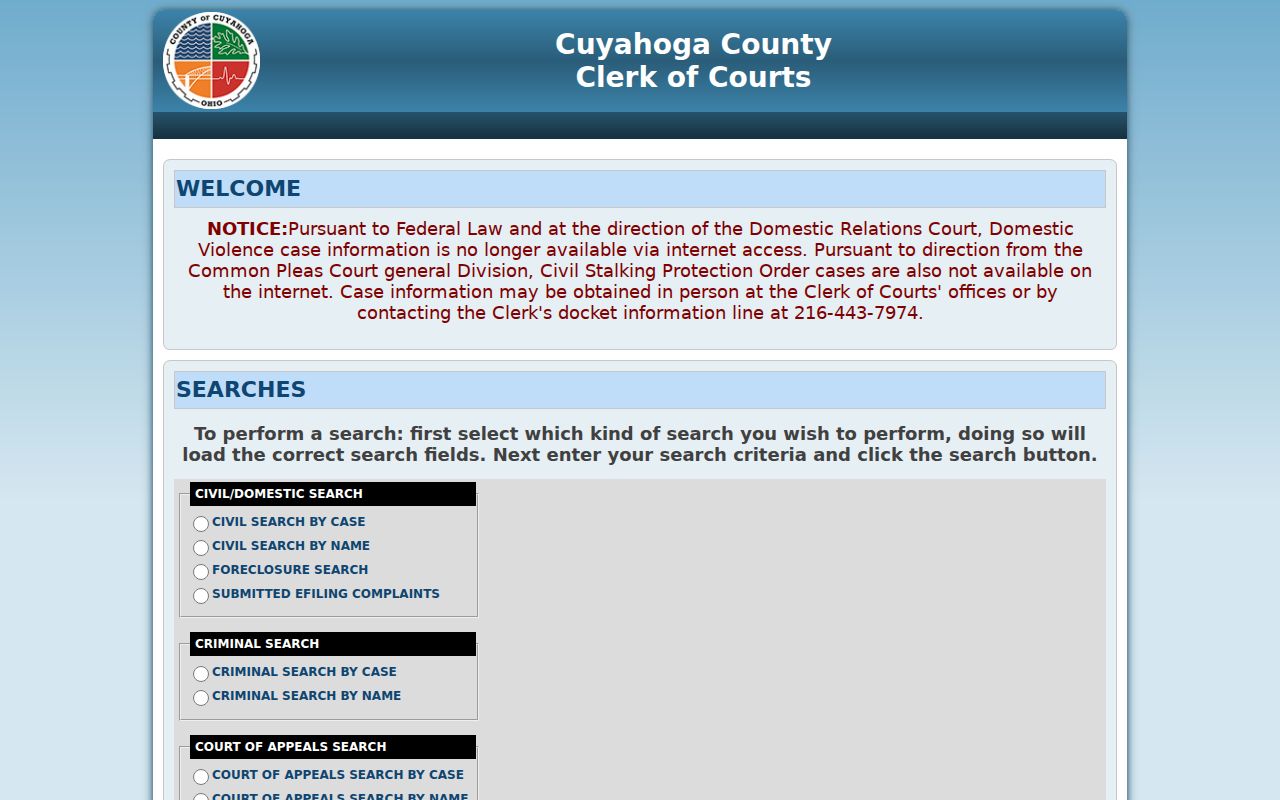
Cuyahoga's Common Pleas Clerk offers a second route. Its WebDocket covers civil, criminal, foreclosure, and appellate searching by case or name. Official in-person records control when versions disagree. Protected categories stay offline. Domestic-violence and civil protective-order material never appears on the public internet screen. The Cuyahoga Clerk WebDocket selection screen shows the separate paths. Choose court and mode before reading anything into an indexed name.
Estate and heir questions belong to Probate Court. That channel runs on a party search, a case-copy procedure, and an archives path for its older estate records.
Shaker Heights Record Request Options
Need a municipal record that Shaker Heights does not post online? The Shaker Heights non-police request form is the main channel. It asks for a description, format, delivery method, and department. Email PDFs are free. Hard copies run five cents per page. A compact disk costs fifty cents, plus postage or special-copying charges where they apply. A strong request names the address or person only as needed. It also gives the date range, the record type, and the department most likely to hold it.
Picking the right department keeps things moving. Building, Planning, Neighborhood Revitalization, Finance, Law, and Council each hold different municipal material. Police records follow a separate procedure. Court copies go through the court itself. Ohio’s Public Records Act, R.C. 149.43, requires prompt inspection and copies within a reasonable period, with lawful redaction allowed.
The City request form offers a practical fallback. It works whenever a Shaker Heights residents directory question turns on an existing municipal record rather than a guess.
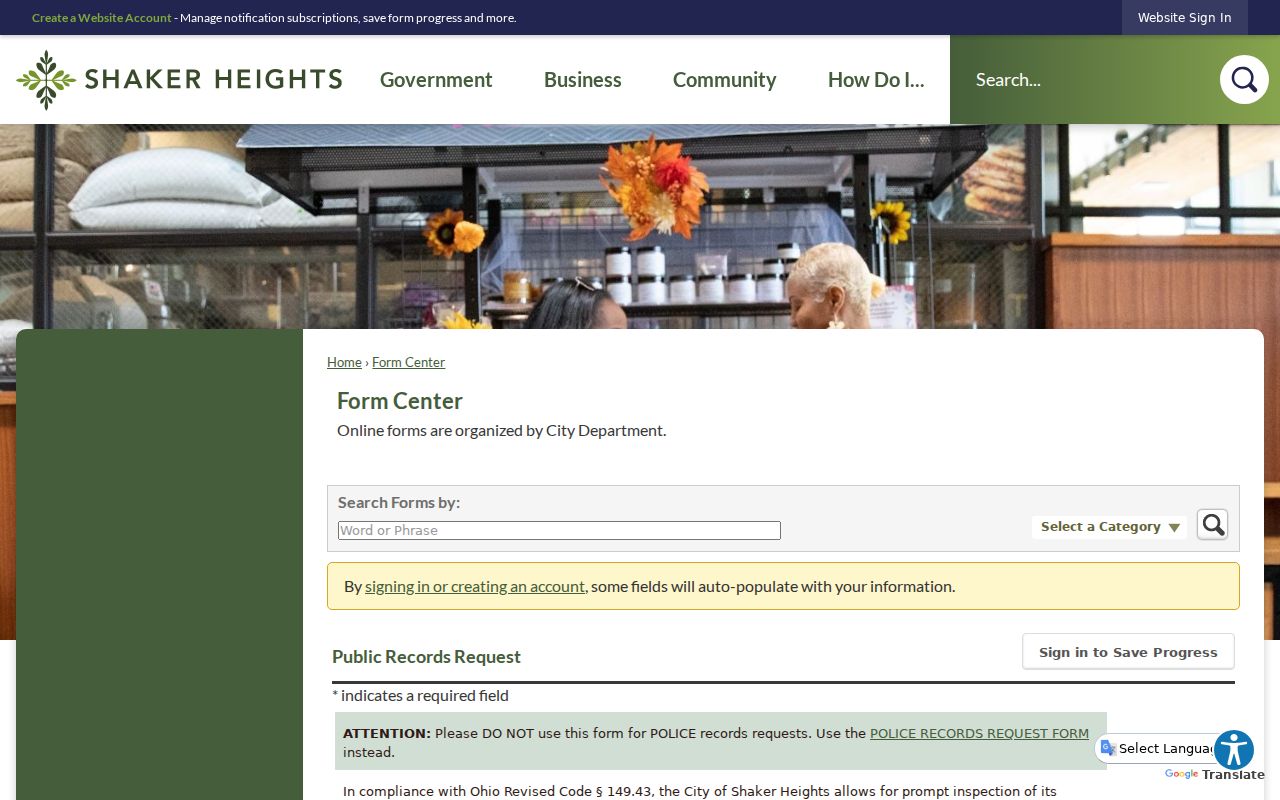
City policy does not require written requests. Still, writing one down preserves a clear record of the exact material sought and the delivery choice.
Shaker Heights Vital and License Checks
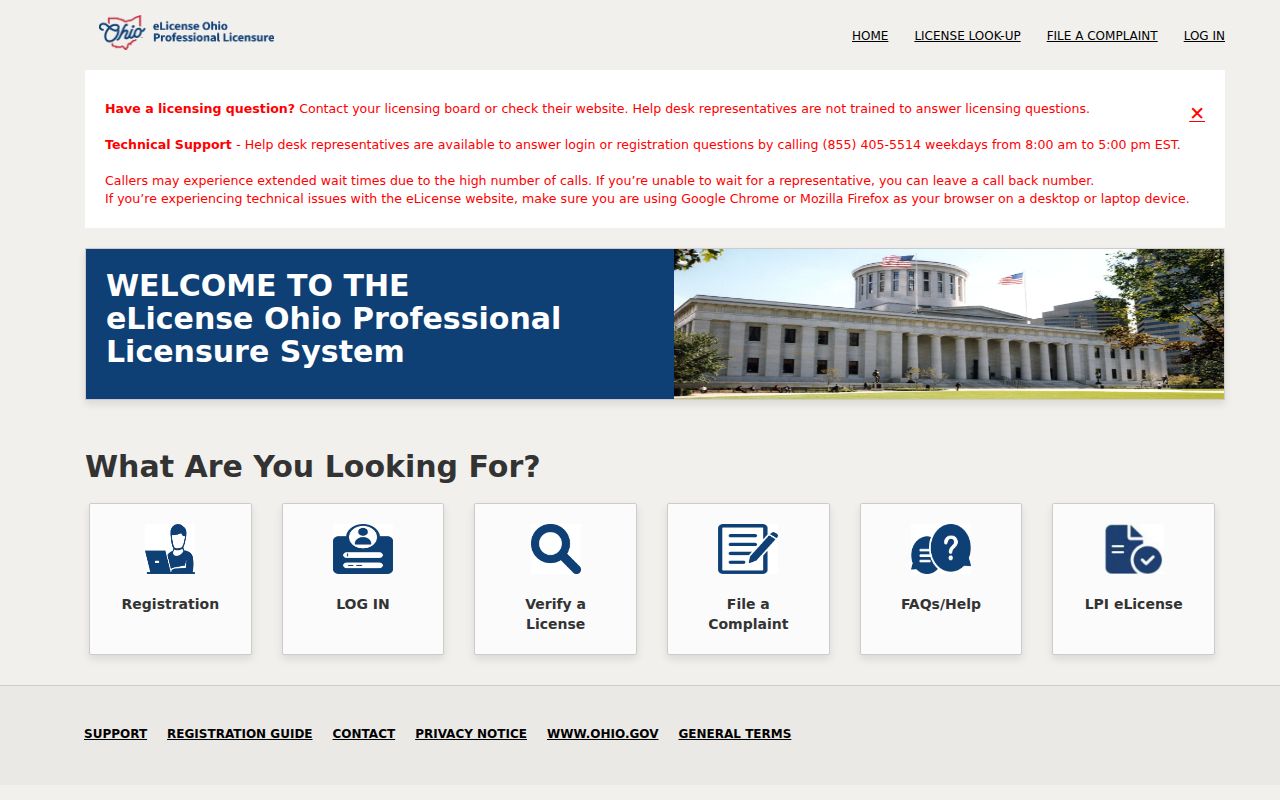
Vital records and license checks answer narrow, specific questions. Shaker Heights residents rely on the state system for birth and death certification. R.C. 3705.23 assigns that work to Ohio and to eligible local registrars. For marriage licenses and certified marriage copies, Cuyahoga Probate is the local route. The Ohio History Connection offers a historical death index spanning 1913 to 1944 and 1954 to 1970. Its archive copies carry no certification, though. Use these records to document a family-history or estate question. Then confirm details with the proper custodian. For professional credentials, Ohio eLicense is a focused state tool. It shows a posted credential's status, board, dates, and any displayed board action. Treat the result as a status check, not an address list. Verify anything important against the specific board record and date.
State custody tools run even narrower. Ohio DRC's offender search locates people in state custody, not a complete arrest or court record and not a current-resident directory.
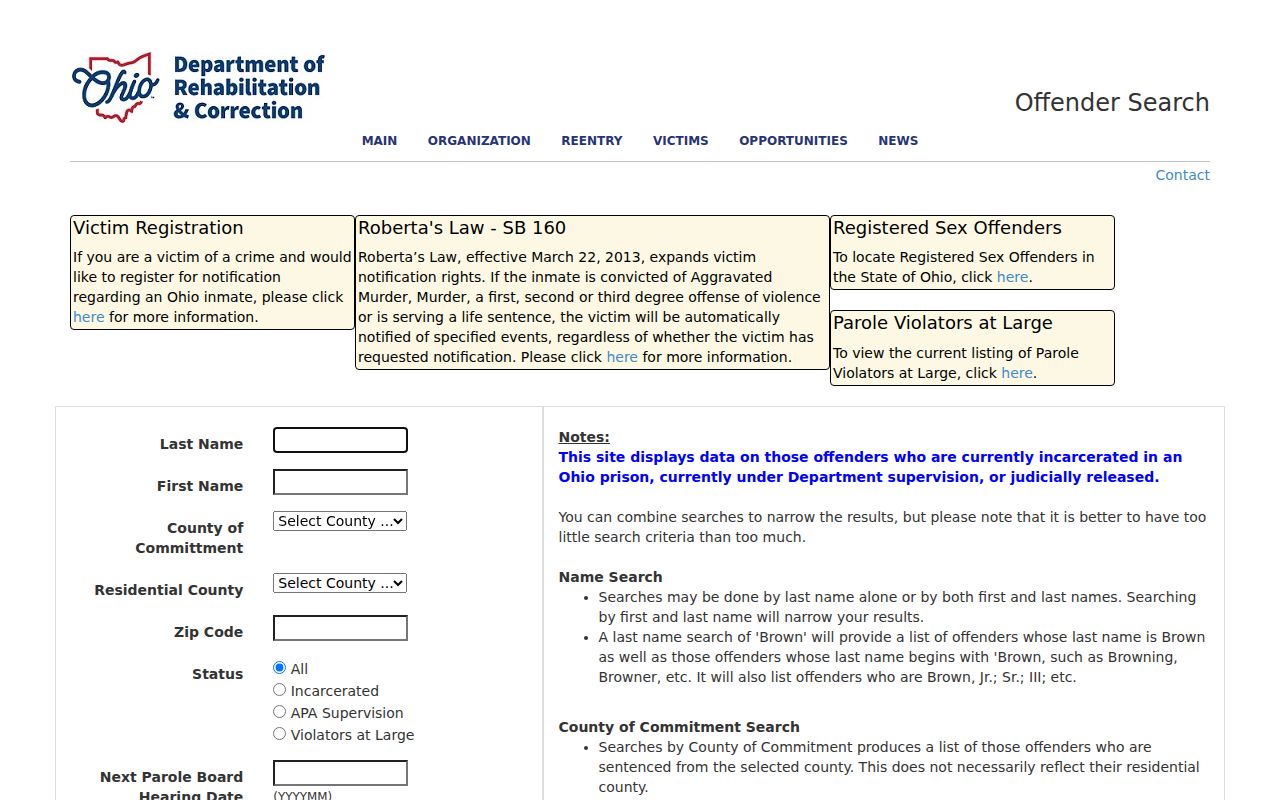
Scope is the real safeguard. A specialized state result cannot prove that someone now lives in Shaker Heights.
Shaker Heights Library Archives
The Shaker Heights Public Library Local History Collection is the strongest local historical channel when a web index runs dry. Its inventory spans City material, community associations, elections, school history, architecture, integration, rapid-transit material, and yearbooks. It also holds local serials. The newspaper record has gaps. The library reports incomplete Shakerite issues from 1929 forward and Sun Press/Heights Press microfilm from 1936 to 2010. Those gaps matter. A missing article or name does not prove a household was absent.
The Shaker Historical Society adds an appointment-only archive and house-research support. CatalogIt showed nearly 800 public items by December 2025. Incomplete and minimally processed entries stay labelled. The library and the Society are complementary channels. They are not replacements for Cuyahoga's official parcel and recording records.
Historical Shaker Heights Resident Directories
The parent Cleveland directory named Shaker Heights outright from 1925 through 1950. An address section arrived in 1929. A five-suburb directory of its own ran from 1949 to 1963. The East Suburban series took over in 1964. Cleveland Public Library keeps criss-cross directories too. There, a street number can point to a listed adult, a business, or a phone line. Regional leads also sit at the County Archives and the Western Reserve Historical Society. Those institutions hold other directory and property-research material.
A historical listing ties a person or firm to an address at publication. It proves neither ownership nor a full household. Read the volume's abbreviation key first. Expect nonpublication years. Bring in a deed, tax, probate, or census record whenever the detail counts. The Shaker Heights city directory pages carry the full runs, reading conventions, and shelf paths.
- Parcel
- A permanent property identifier used to connect tax, map, transfer, and deed records.
- Index
- A finding tool that points to a record. It is not always the underlying document.
- Criss-cross directory
- An address-first directory that can list the occupant or business shown for a street address.
- Roll
- A list created for a specific purpose, such as registration, taxation, or a court docket.
Shaker Heights Records Across Eras
Recorded documents at the county reach back to 1810. Shaker Heights did not become a village until 1911 or a city until 1931. That earlier span matters. A property trail may cross the old Warrensville or North Union landscape. Cuyahoga Archives keeps historical tax material, plats, appraisal cards, probate estate files, and other series. Each series has its own access conditions. A modern street address may be only the newest label. It sits atop a far older chain of parcel and legal-description evidence.
For an older Shaker house, start with the present parcel. Use the MyPlace Transfers tab for the 1975-forward trail. Then walk former owners through the recording index. Shaker Heights Building Cards offer a local bridge. Over 10,000 cards can be searched by address, original owner, architect, builder, or keyword. A missing card, though, is no proof a building never stood there. Treat the gap as a prompt to compare plats, deeds, and library material instead.
Note: Record survival and online access vary by collection. Keep the source name, date, and search terms with each finding.